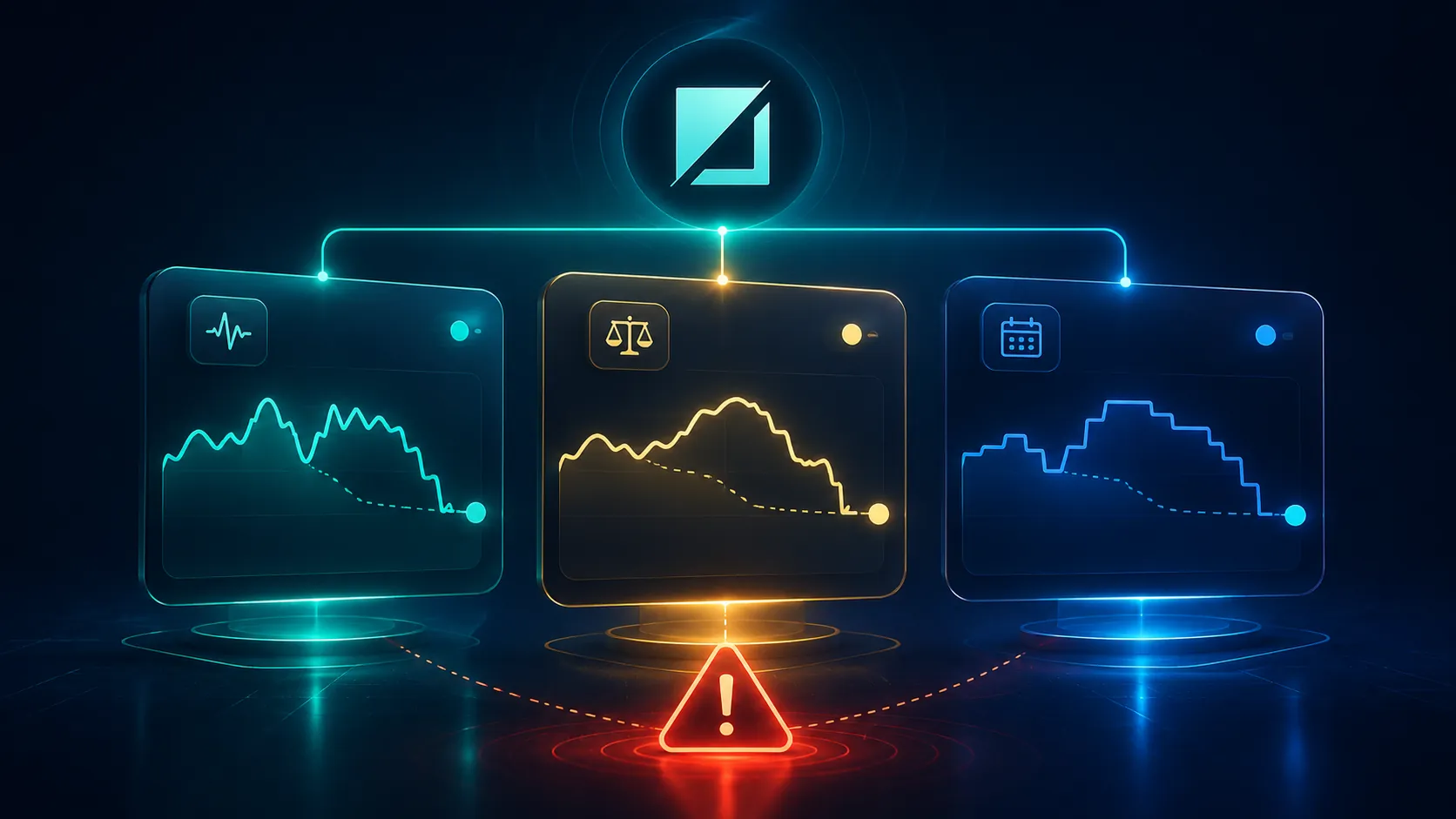
"Maximum drawdown: 10%." That one line can mean three different rules, and picking or misreading the wrong one is how traders breach accounts they thought were safe. Here is how each type works.
Trailing drawdown means your loss limit isn't fixed at the starting balance. It follows your account upward as you make profit. The details that matter are what it follows, and when it updates.
Type 1: Real-time equity trailing
The drawdown line tracks your highest equity, including floating (unrealized) profit, and it updates tick by tick. If your account starts at $100,000 with a 10% trailing limit, your floor is $90,000. If a trade floats you up to $103,000 in equity, your floor moves to $93,000 on that same tick.
The catch: if that trade comes back down and you close it flat, your equity is back at $100,000 but your floor stays at $93,000. You "didn't lose money," yet a round-trip used up 30% of your buffer. This is the strictest version, which is why exit management matters so much under it.
Type 2: Closed-balance trailing
The line tracks your highest closed balance, so only realized profit counts. Floating gains don't move the floor. In the same example, the trade has to actually close at $103,000 for your floor to rise to $93,000. A winner that floats to $103,000 and closes flat leaves your floor at $90,000.
This one is much more forgiving. You can give trades room without the floor following every wick of floating profit.
Type 3: End-of-day trailing
The line updates once a day, usually at the daily market close, based on your end-of-day balance or equity. Intraday spikes don't move it; only where you finish the day does. In strictness it sits between the other two: you have room to work intraday, but a strong close raises your floor for tomorrow.
Two accounts with the same "10% drawdown" can have floors thousands of dollars apart. The type matters more than the percentage.
Why this wrecks accounts
Most blown trailing accounts come from one assumption: "I'm up, so I have more room." Under real-time equity trailing, being up shrinks your room every time floating profit sets a new high. Traders watch their balance, feel safe, and never realize the equity-based floor has crept up right beneath an open position. One normal pullback later, the account is breached.
How to protect yourself
First, find out exactly which type your firm uses. It's often in the fine print rather than the headline numbers. Second, set your protection to match. PipsGuard's Trailing Drawdown rule lets you pick the same method your firm uses: real-time equity, closed balance, or end of day. Once it's set, PipsGuard tracks the same floor your firm tracks and acts before you reach it, closing positions or blocking new risk while you still have an account to protect.
Know where your floor is at all times.
Match PipsGuard's trailing drawdown to your firm's method so the floor never catches you out.
Get Started →